Skip to product information
1 of 2

SuperStroke + Putting Mat and Birdie card

SuperStroke + Putting Mat and Birdie card

You Can't Fix It If You Can't See It.
Regular price $189.85
Sale price $189.85 Regular price
Sale Sold out


Perfect Putting Practice and Analysis

Putting is a skill that can make or break your round and mastering it can significantly lower your scores. With the right tools, techniques, time, and mindset, anyone can learn to putt like a pro. SwingTraX™ 360 is the right tool for the task! While you may not have a personal golf instructor to help you practice like a Pro everyday, you can have SwingTraX™ 360 with SwingVue™ 360 technology which is the next best thing! You can't fix it if you can't see it!
SKYTRAK™ 9' Putting Turf Mat with Automatic Electric Return

  • Professional Size & Design: Measuring 9’ x 14", this premium mat provides ample space to master critical short game distances. A precision engineered center white line is woven directly into the turf to guide your alignment and refine your stroke path.
  • Tour Quality Stimp Surface: Designed to lay perfectly flat right out of the box, our high density turf mimics the stimp speed of a professional green. This ensures a "true roll" experience that translates directly from your home or office to the golf course.
  • Integrated Distance Markers: Features durable rubber markers at 3’, 6’, and 8’ intervals, allowing you to run structured drills and perfect your distance control with tour level accuracy.
  • High Efficiency Electric Return: Powered by 4 AA batteries (not included), the automatic return system instantly sends your ball back after every putt. Stay in your stance and maximize your training reps without interruption.
View full details
SkyGolf

Perfect Putting Practice Anywhere!

With the Putting Practice Bundle! A single SuperTag or SuperStroke SuperTag, Birdie Membership and Putting Mat you can set up anywhere to practice on the go.

⚠️ IMPORTANT SOFTWARE REQUIREMENT: YOU CAN'T PLAY WITHOUT POWER

SkyGolf SuperTags™ are high-precision hardware sensors powered by the SkyGolf 360 Cloud. To activate your tags and view your shot data, you must have an active SkyGolf 360 Membership.

  • Using 1 to 5 Tags? You need at least a Birdie, Eagle, or Double Eagle membership to unlock SwingTraX™ 360 (swing speed, tempo, path, and 3D visualization).
  • Using 6 to 14 Tags? You must select the PRO X Membership to unlock GameTraX™ 360 (automatic on-course shot tracking, GPS mapping, and Strokes Gained analytics).
  • Using a Launch Monitor / Simulator? You must select the PRO Plus Membership to sync live club delivery data directly into your SkyTrak or 3rd-party simulator.
  • Already an active SkyGolf member with the correct tier? Select "None" in the membership dropdown.

The great Ben Hogan famously said a golfer has three swings: the one you practice with, the one you play with, and the one you use under pressure. SkyGolf SuperTags™ allow you to capture, see, and fix all three without ever setting up a camera.

Whether you are equipping a single driver for indoor speed training or wiring your entire 14-club bag for tournament-level course mapping, SuperTags deliver Tour-level intelligence directly to your smartphone, SkyCaddie PRO device, or launch monitor.

Supertag™ Specifications

SkyGolf

Technical Specifications

  • Weight: 9.4 grams
  • Water Resistant

Hardware Specifications

  • Breakthrough Sensor Technology
  • Bluetooth
  • Replaceable Panasonic 2032 Coin Battery
  • SkyCaddie PRO 5X Ready
  • SkyCaddie PRO 4X Ready
  • iOS 13 and greater Ready
  • Android Samsung S21 or later

Package Includes

  • 1, 4 or 14 SuperTags™ (depending on package purchased)
  • Quick Start Guide
  • Warranty and License Agreement

Virtual 3D Putting Analysis

Learn To Putt Like A Pro

Putting is a skill that can make or break your round and mastering it can significantly lower your scores. With the right tools, techniques, time, and mindset, anyone can learn to putt like a pro. SwingTraX™ 360 is the right tool for the task! While you may not have a personal golf instructor to help you practice like a Pro everyday, you can have SwingTraX™ 360 with SwingVue™ 360 technology which is the next best thing! You can't fix it if you can't see it!

See Your Putting Stroke

With SwingTraX™ 360 and SwingVue™ 360 3D animation technology, you can instantly see a virtual 3D model of your putting stroke in real time viewable from any angle. All you need is a SuperTag™ attached to your putter. No cameras or other special equipment required.

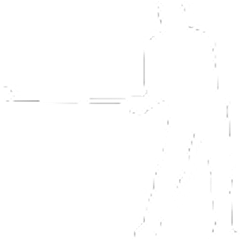
With the simple swipe of your finger, you can see your putting stroke path from any angle, or you can select from one of the three preset 3D camera views:

SkyGolf

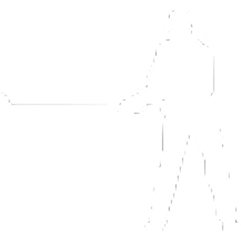
DOWN THE LINE

SkyGolf

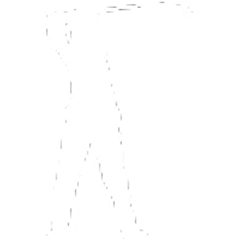
TOP VIEW

SkyGolf

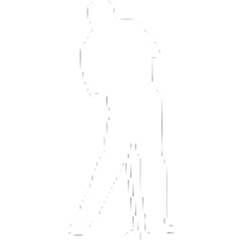
FRONT VIEW

Spotlight Features

Analyze Your Putting Stroke

For those golfers who want to take a deeper dive, SwingTraX™ presents 16 putting metrics from 3 key positions of your putting stroke so you can pinpoint your strengths and weaknesses.

You can select the specific metrics that can help you improve the different aspects of your putting game, such as:

  • Tempo and Timing
  • Distance and Speed Control
  • Direction and Touch

Improve with Groove Training

SwingTraX™ 360's Groove Training mode provides you with real time visual and audio feedback so that you can practice with purpose.

Just select the parameter you want to improve and SwingTraX™ 360 will help you dial it in!

And with three proficiency levels to choose from, you can start easy and progress to the highest level as you continue to improve.

SuperTag® Metrics

SuperTag Swing Positions

The system P1 through P10 describes the key positions during a golf swing that are important for analyzing and fixing potential flaws in your mechanics. SuperTag® provides metric parameters and 3D visualizations for five key positions that can have a significant impact on a golf swing - P1, P2, P4, P6, and P7.

SkyGolf

ADDRESS (P1)

SkyGolf

HALFWAY BACK (P2)

SkyGolf

TOP OF SWING (P4)

SkyGolf

HALFWAY DOWN (P6)

SkyGolf

IMPACT (P7)

Full Swing Metrics

Speed Metrics

SkyGolf
Clubhead Speed

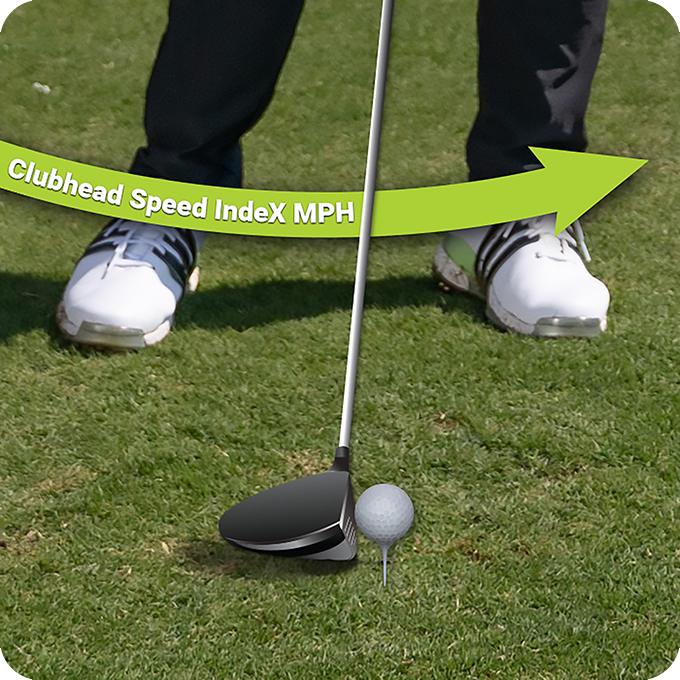
Clubhead Speed, or CHS, is a measure of how fast the putter is moving at impact P7.

Developing a good feel for CHS is essential for achieving effective distance control, especially in putting where minor variations in CHS can significantly influence the distance that a golf ball rolls.

SkyGolf
Peak Hand Speed

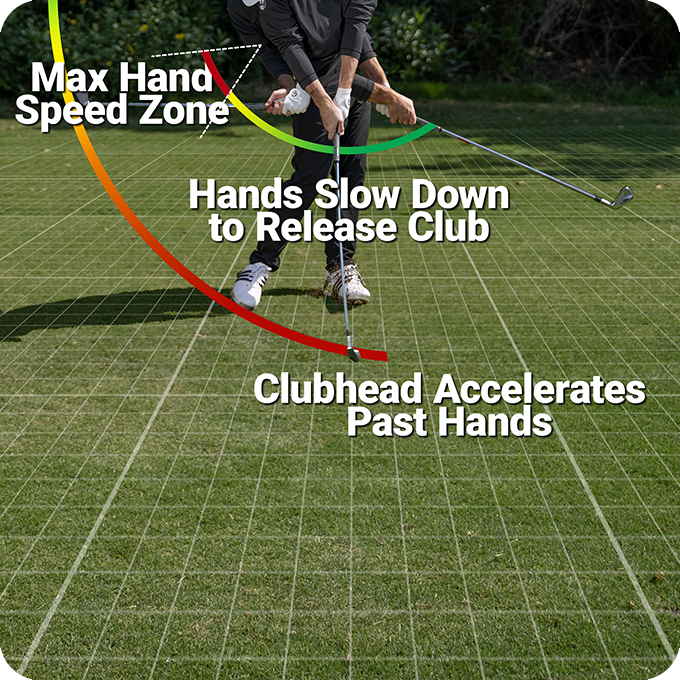
Peak hand speed refers to the maximum speed the hands reach during the downswing.

Ideally, Peak Hand Speed should occur at a point in the down swing near P6 Halfway Down as shown by the Red Max Hand Speed Zone in the image. Reaching peak hand speed at this point provides optimal time for the hands to efficiently release stored energy (lag) to the club head, maximizing club head speed at impact.

If hand speed peaks too early, the golfer loses the ability to store energy effectively. Conversely, if it occurs too late, there won’t be enough time to generate the full “whipping action” necessary for maximum impact speed.

SkyGolf
Swing Tempo

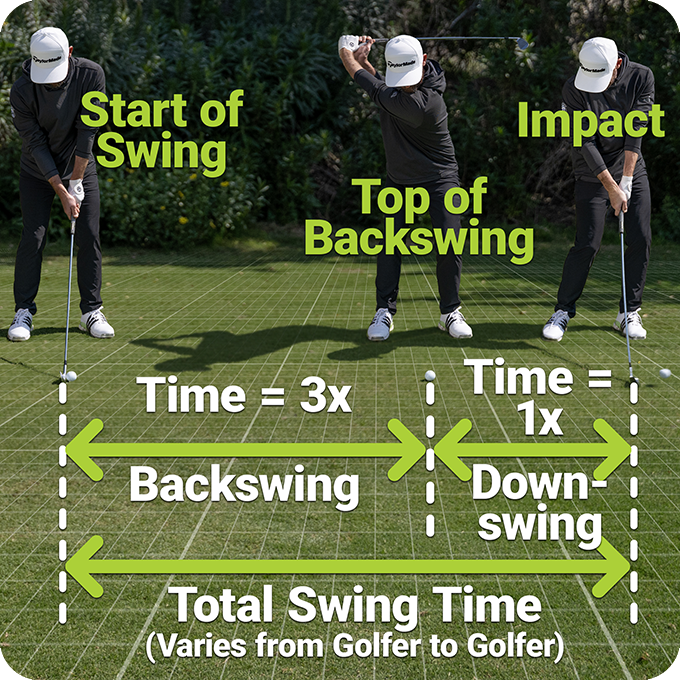
Swing Tempo refers to the rhythmic relationship between the duration of the backswing and that of the downswing time, expressed as a ratio. Maintaining a balanced tempo is essential for hitting consistent and powerful shots.

A typical full swing tempo is around 3:1, meaning the backswing takes about three times longer than the downswing. SuperTag displays this ratio as a decimal, such as 3.00.

For shorter shots like chips, pitches, and putts, a tempo of 2:1 (2.00) is generally more effective.

SkyGolf
Total Swing Time

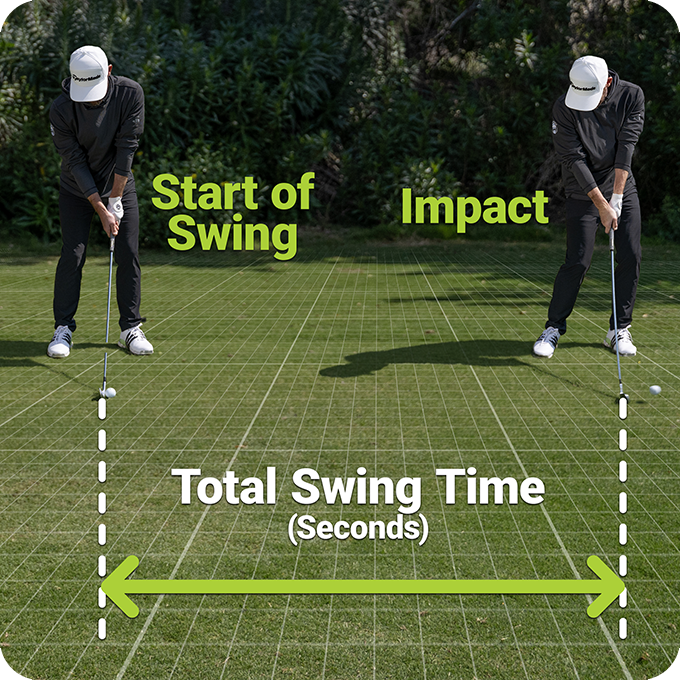
Total Swing Time measures the duration (pace) of a golf swing from the start of the backswing to the moment of impact with the ball. This time is typically measured in seconds or milliseconds.

Every golfer has an optimal swing pace that promotes consistent and accurate shots. Having a good pace will not only produce repeatable, high-quality shots, but it also plays a critical role in maintaining proper Tempo, which is essential for maximizing swing efficiency and overall performance.

Address P1

SkyGolf
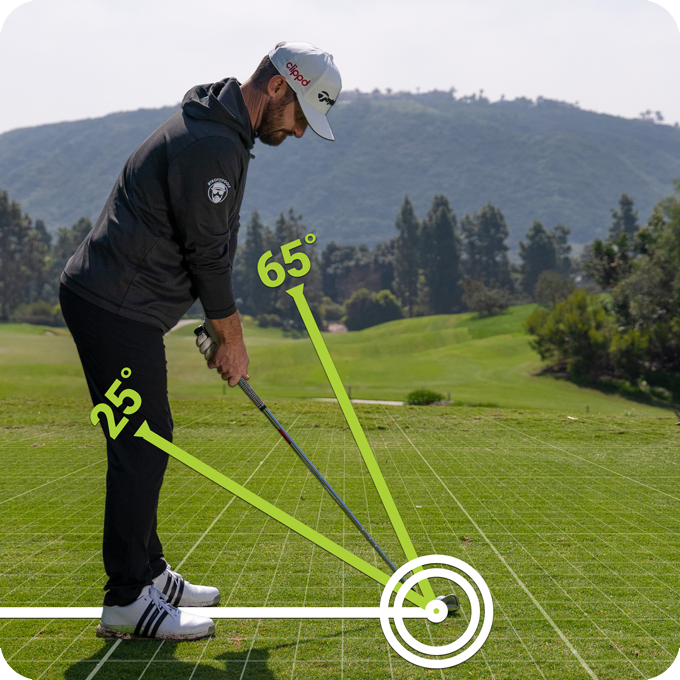
Shaft Angle at Address P1

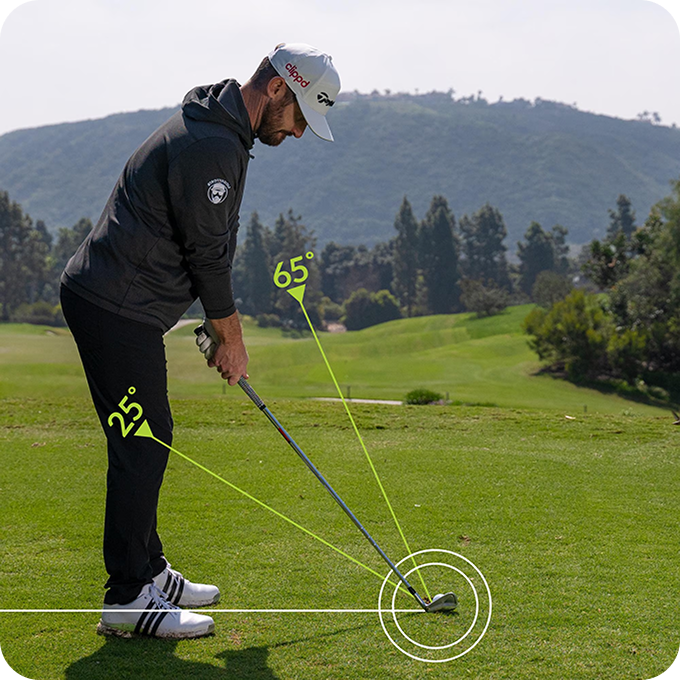
Shaft Angle at Address Position P1 refers to the angle between the club shaft and the ground, indicating how upright or flat the club shaft is at setup. A higher shaft angle generally corresponds to higher hand positioning, which is more common with shorter clubs.

The shaft angle plays a crucial role in determining the swing plane. For example, standing closer to the ball with a short wedge creates a higher shaft angle, leading to a steeper swing plane. Conversely, a longer club like a driver results in a flatter shaft angle and shallower swing plane.

Comparing the Shaft Angle at Address P1 to the Shaft Angle at Impact P7 can be valuable for assessing swing consistency and efficiency.

SkyGolf
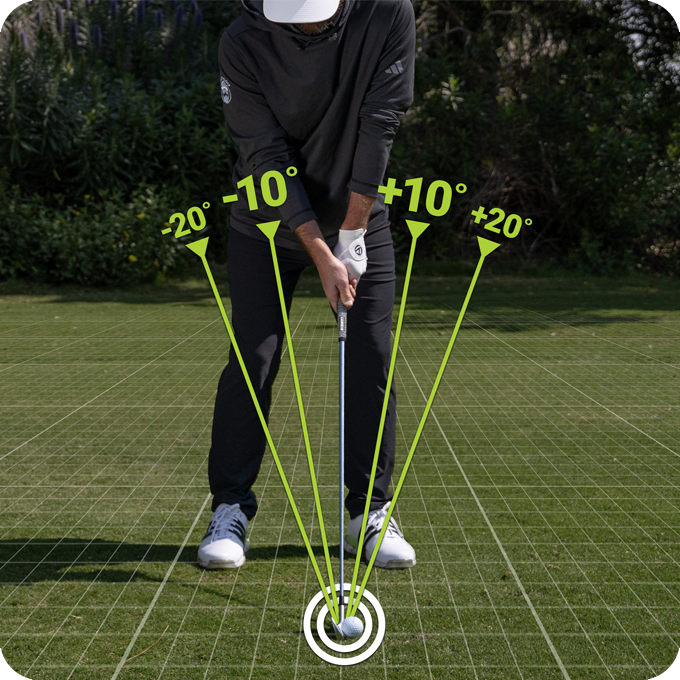
Shaft Lean at Address P1

Shaft Lean at Adress Position P1 measures how far the hands are pressed forward (+) or backward (-) at address relative to a vertical line.

A forward shaft lean, or "forward press", indicates that the hands are ahead of the ball. A backward shaft lean indicates the hands are behind the ball.

Takeaway P2

SkyGolf
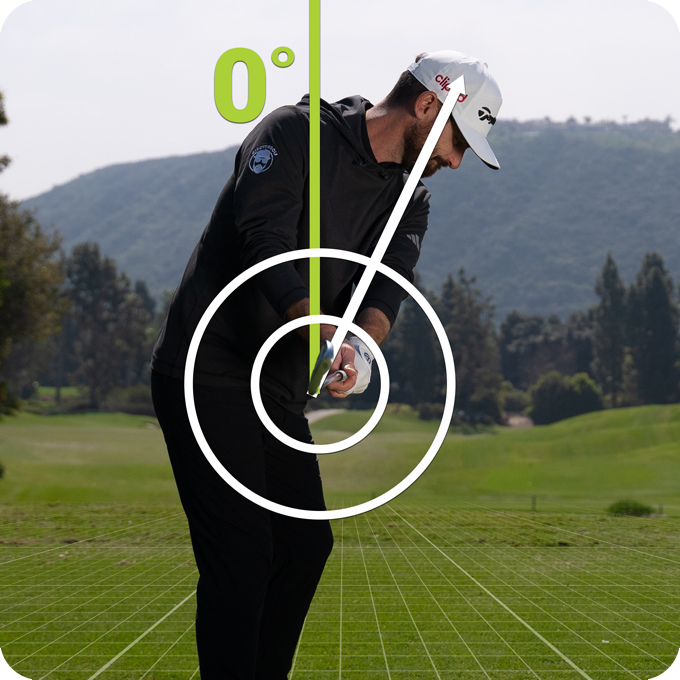
Face Angle at Halfway Back P2

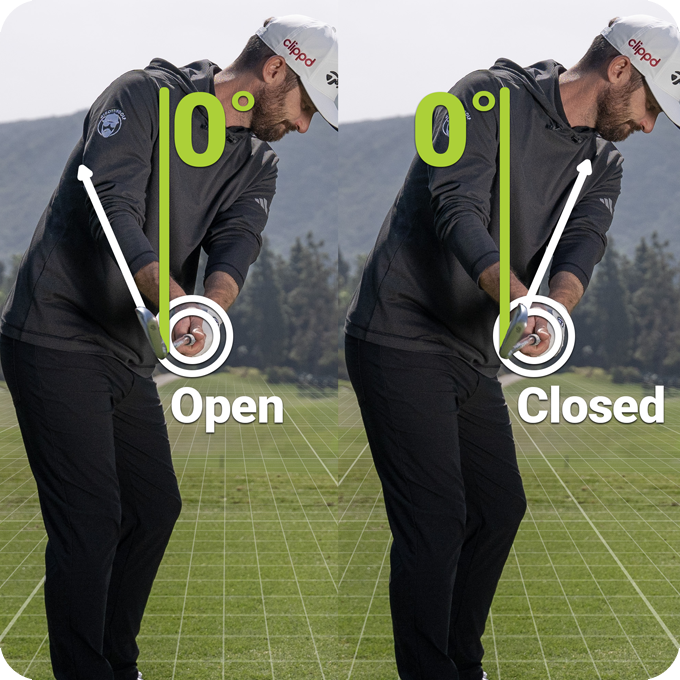
Face Angle at Halfway Back Position P2 refers to the angle of the clubface relative to vertical when the shaft is parallel to the ground. When the face angle points straight up it is at 0°.

A Face Angle that points downward from 0° is reported by SuperTag® as closed (+), while a clubface that points upward from 0° is reported as open (-).

Generally, the Face Angle at Half Back should be slightly closed and approximate a golfer’s spine angle.

SkyGolf
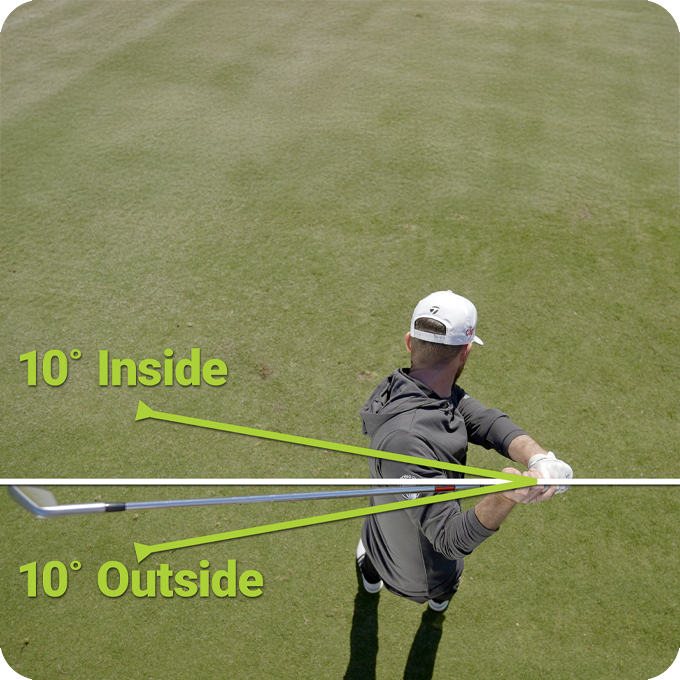
Shaft Direction at Halfway Back P2

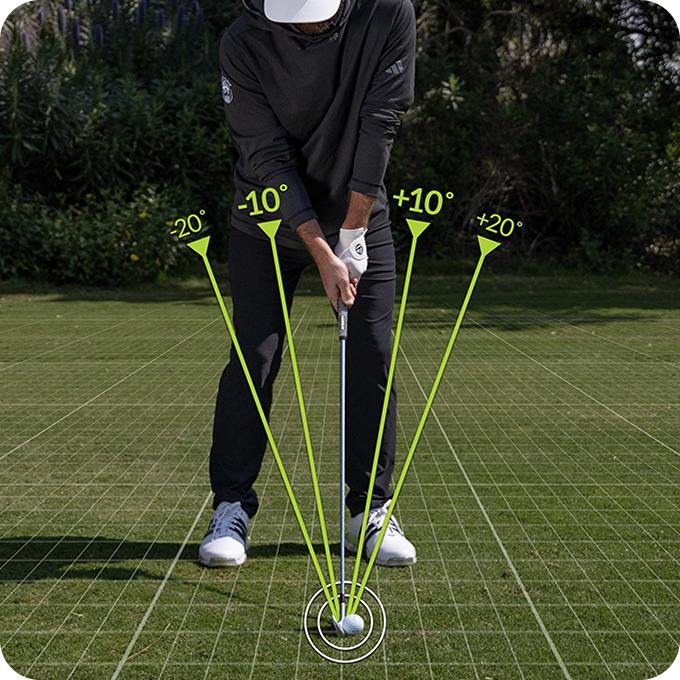
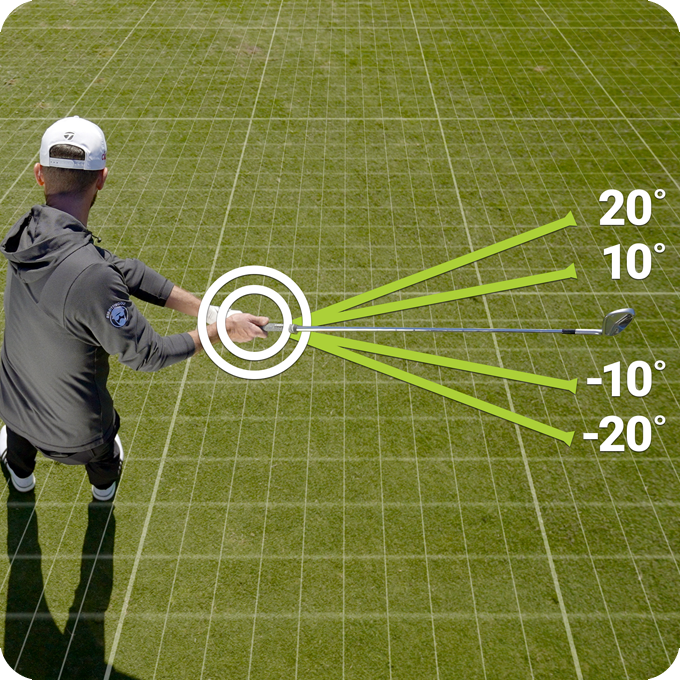
Shaft Direction at Halfway Back Position P2 measures the position of the club shaft during the takeaway, specifically when the shaft is parallel to the ground for the first time in the backswing. At this point, the direction of the shaft indicates how far inside or outside the club is relative to the target line.

When the club is back perfectly online, the shaft will be parallel to the target line and the shaft direction will measure 0°. However, if the shaft points too far inside or outside at P2, it can lead to other swing issues that result in poor contact or directional inconsistency. While some great golfers have played successfully with extreme inside and outside shaft positions at P2, a more neutral position often leads to more reliable ball striking.

Top Of Swing P4

SkyGolf
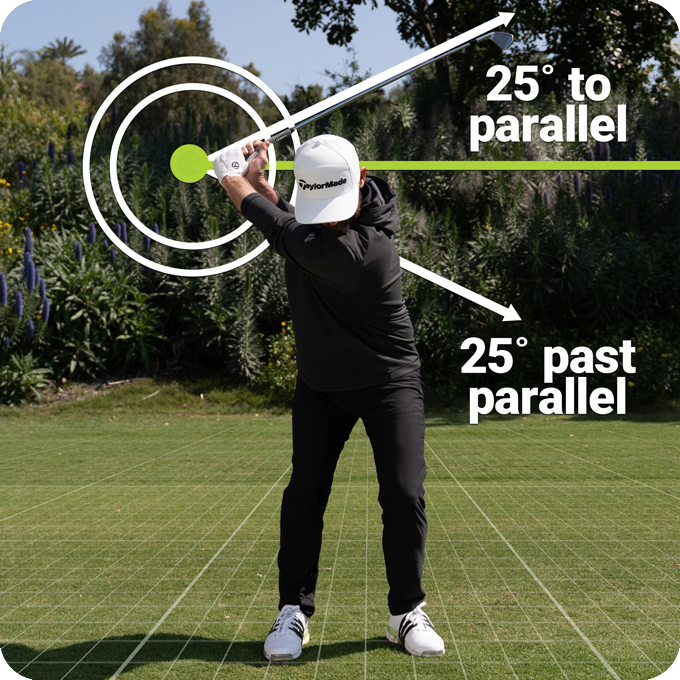
Backswing Length at Top P4

Backswing Length at Top Position P4 measures the angle of the club shaft at the top of the backswing, marking the transition to the downswing.

For full swings, it is measured by how close the shaft is to becoming parallel to the ground. With longer clubs such as the driver, the shaft may reach, or even go slightly past parallel.

For partial swings, such as pitches, and chips are measured in terms of where the club shaft would be on a clock face.

SkyGolf
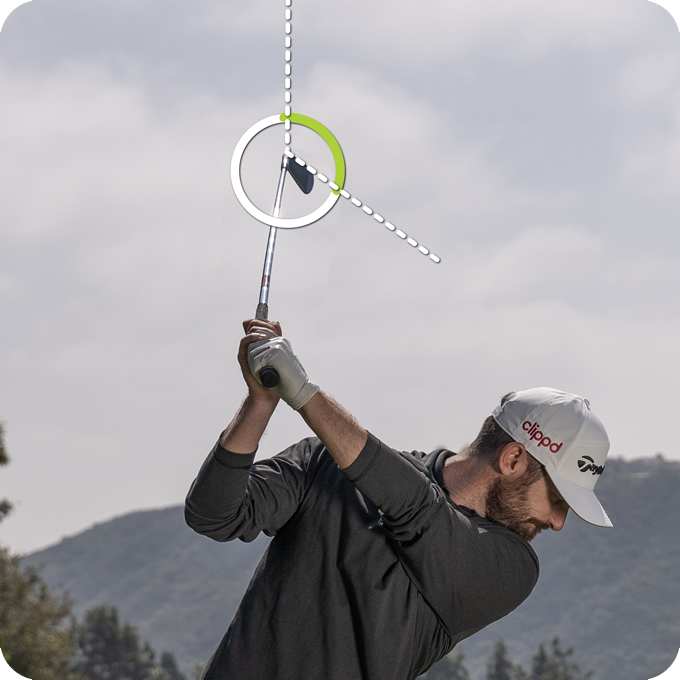
Face Angle at Top P4

Face Angle at Top Position P4 measures the face angle at the top of the backswing in degrees below or above horizontal.

A square clubface typically falls between 40° and 50° below horizontal for most backswings. Swings with higher hand positions (more upright) will have a greater angle, while flatter swings with lower hands will have a smaller angle.

SkyGolf
Shaft Direction at Top P4

Shaft Direction at Top Position P4 refers to the direction of the shaft at the peak of the backswing when the club is at its furthest point from the address position.

This angle is measured in relation to the golfer’s target line and indicates how “on-plane” the club is at this stage of the golf swing.

An outside Shaft Direction at Top P4 indicates the shaft is positioned short of the target line or "laid-off" while an inside direction suggests that the shaft has "crossed over" the line.

Halfway Down P6

SkyGolf
Face Angle at Halfway Down P6

Face Angle at Halfway Down Position P6 is the angle of the clubface at the last position of the downswing before impact where the club shaft is parallel to the ground.

Face angle at P6 is measured relative to the vertical and is 0° when the toe points straight up.

The farther downward the clubface points, the more closed (+) the club face. Conversely, if the clubface points upward past vertical it is more open.

Generally, the face angle at P6 should approximate the face angle at P2 +/- a few degrees and may be about the same as the spine angle.

SkyGolf
Shaft Direction at Halfway Down P6

Shaft Direction at Halfway Down Position P6 measures the direction of the club shaft during the downswing when the club is parallel to the ground.

At this position, the golf shaft should be approximately parallel to the target line. However, this exact position can vary slightly based on the golfer's swing style and individual characteristics.

If the club is returned perfectly to the target line, the shaft direction will read 0°.

Impact P7

SkyGolf
Shaft Lean at Impact P7

Shaft Lean at Impact Position P7 is a measure of the angle of the club shaft, leaning either forward or backward at impact.

This angle indicates how far the handle of the club is positioned ahead or behind the club head and ball at the moment of impact. A forward shaft lean indicates that the hands were ahead of the ball. A backward shaft lean indicates the hands were behind the ball.

SkyGolf
Shaft Attack Angle at Impact P7

SuperTags measure the angle, up or down, Angle of Attack (AoA) at Impact Position P7 that the club “shaft” is traveling towards the ball at impact. If the club shaft is moving down at impact, the Shaft AoA is a negative (-) number. If it is moving up, the shaft AoA is a positive (+) number.

It is important to note that factors such as forward, backward, and vertical bending of the shaft, caused by shaft flex and kick point, can influence the clubhead’s angle of attack. Whereas the Shaft AoA provides a true measure of how a golfer is moving the handle of the club. As such, there may be differences between clubhead AoA as measured with a launch monitor and the Shaft AoA.

Every golfer has a Shaft Angle of Attack (AoA) that is most effective for their swing style. By swinging with the most effective Shaft AoA, a golfer can more accurately select a shaft that achieves the desired clubhead angle of attack. Thus, creating a perfect synergy between swing and club.

SkyGolf
Shaft Angle at Impact P7

Shaft Angle at Impact refers to the position of the golf club's shaft relative to the ground at impact.

Shaft Angle at Impact can vary depending on several factors, including the club length, distance from ball, swing style, and the desired shot shape.

Comparing the Shaft Angle at Address (P1) to the Shaft Angle at Impact (P7) can be valuable for assessing swing consistency and efficiency. Observing how these angles differ can help identify areas for improvement and ensure a more effective swing.

Putting Metrics

Speed Metrics

SkyGolf
Clubhead Speed

Clubhead Speed, or CHS, is a measure of how fast the putter is moving at impact P7. Developing a good feel for CHS is essential for achieving effective distance control, especially in putting where minor variations in CHS can significantly influence the distance that a golf ball rolls.

SkyGolf
Tempo

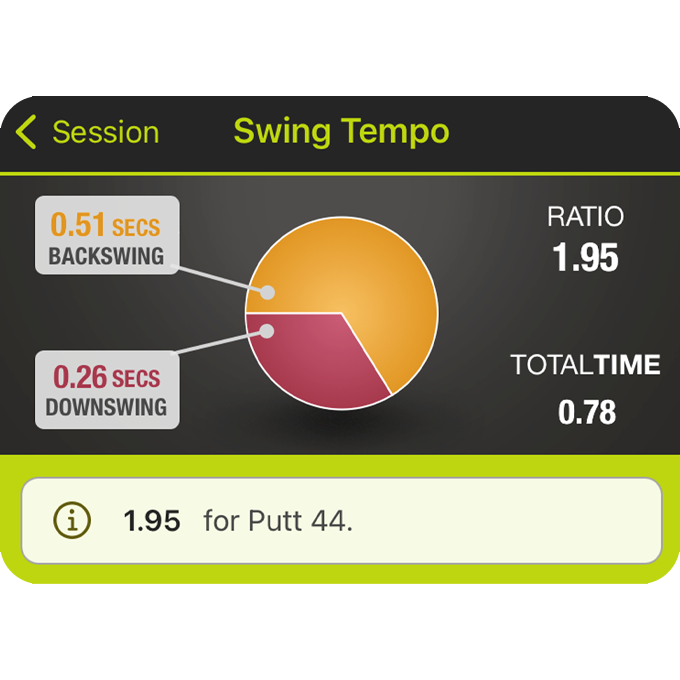
Putting Stroke Tempo refers to the rhythm of a putting stroke measured as the ratio of backswing time to downswing time.

A consistent tempo is essential for developing a reliable putting stroke that achieves both directional accuracy and distance control. Most professional golfers demonstrate a Putting Stroke Tempo of approximately 2:1, meaning that their backstroke takes twice as long as their forward stroke.

Understanding and practicing this ratio can help improve your overall putting performance.

SkyGolf
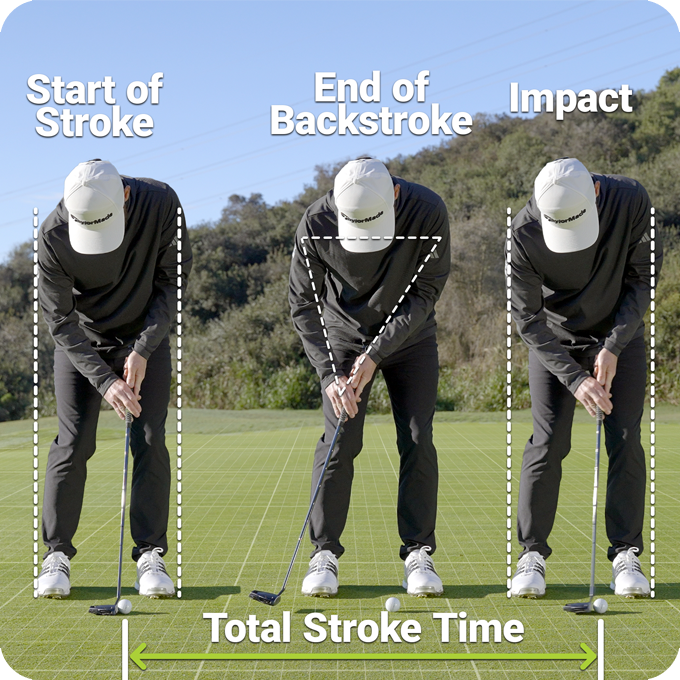
Total Stroke Time

Total Stroke Time is the total elapsed time from the beginning of the backstroke to the moment of impact, measured in seconds.

This metric encompasses both the backstroke and forward stroke, allowing golfers to analyze the rhythm and timing of their putting stroke.

A well-timed stroke with a consistent pace leads to a more rhythmic motion resulting in better distance control and accuracy. Since Total Stroke Time and Tempo work together, finding the most effective Total Stroke Time (Pace) can help a golfer find their best rhythm (Tempo).

Address P1

SkyGolf
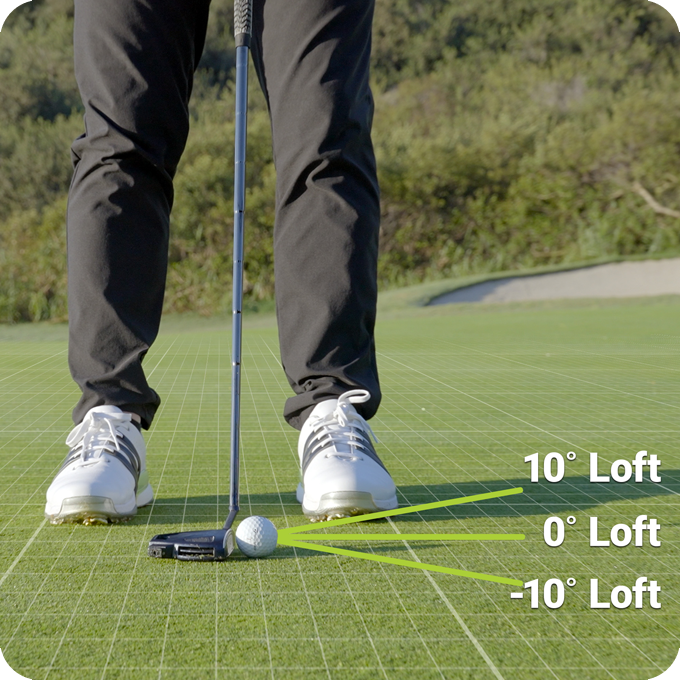
“Dynamic” Loft at Address P1

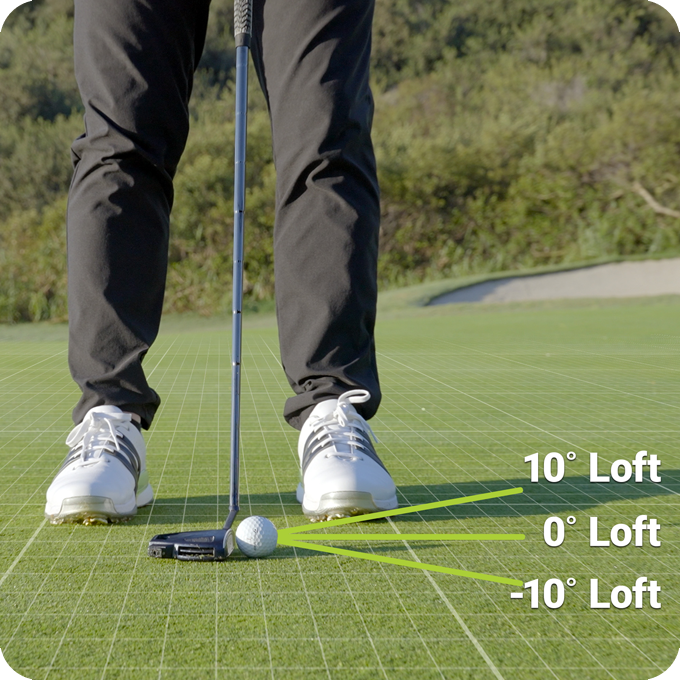
Dynamic Putter Loft at Address Position P1 measures the angle of the putter face relative to ground level at address. Typically putters feature a static loft of 2-4 degrees from horizontal.

The SuperTag measures and reports “dynamic loft” which indicates the actual loft of the putter face at address independent of the static loft, shaft lean, or shaft angle.

Leaning the shaft forward or backward or altering the lie by changing the shaft angle can impact dynamic loft. For instance, tilting the shaft back increases dynamic loft, while angling the face downward decreases it.

SkyGolf
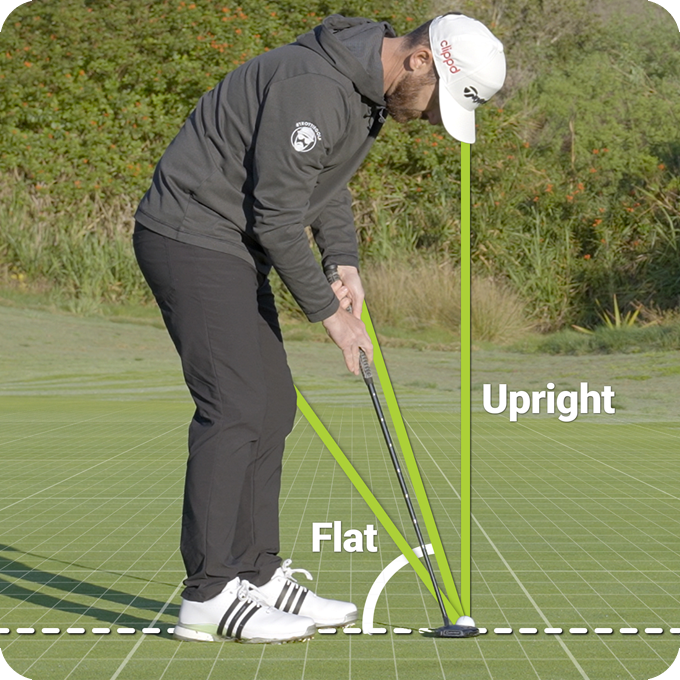
Shaft Angle at Address P1

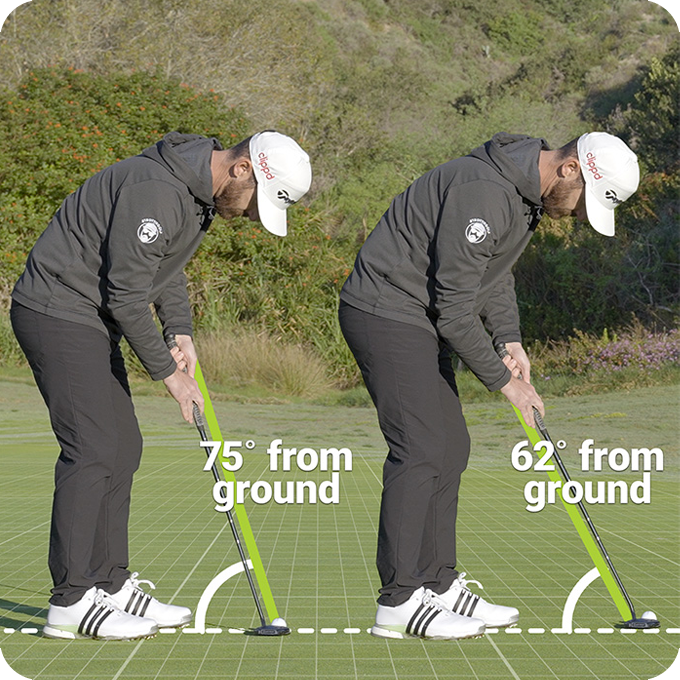
Putter Shaft Angle at Address Position P1 measures the vertical angle of the club shaft relative to the ground.

This angle is crucial for ensuring that the sole of your putter sits flat on the green at address.

If the shaft angle is too steep (upright) the putter head will rest with the toe-down and the heel-up. Conversely, if the Shaft Angle is too flat, the putter will sit with the toe-up and the heel-down. Achieving the correct shaft angle is essential for a stable and consistent putting setup.

SkyGolf
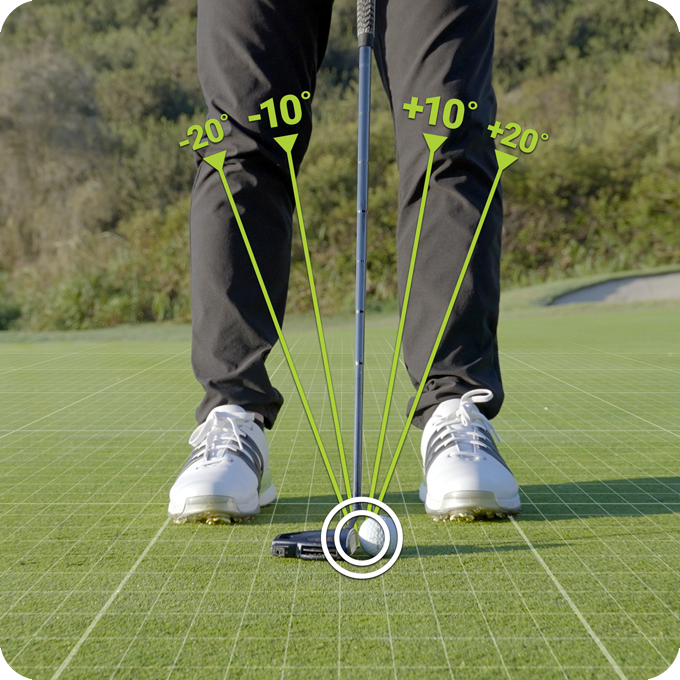
Shaft Lean at Address P1

Shaft Lean at Adress Position P1 measures the angle of the club shaft relative to the vertical, indicating how far the hands are positioned either forward (+) or backward (-) at address.

A forward shaft lean, often called a "forward press", means that the hands are ahead of the ball, while a backward shaft lean suggests that the hands are behind it.

Transition P4

SkyGolf
Backstroke Length at Transition P4

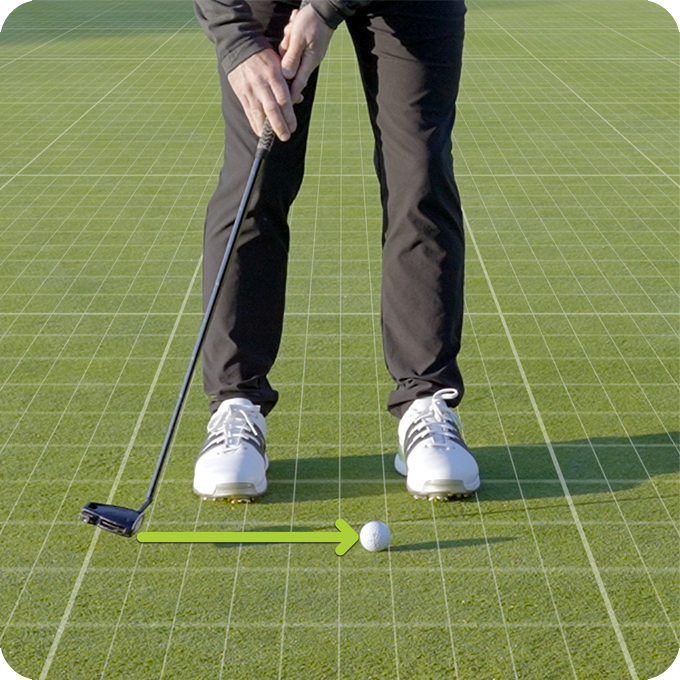
Backstroke Length at Transition measures the farthest point a golfer takes the putter away from the ball during the back stroke before the change of direction to the forward stroke. The length of this backstroke is a critical factor, along with Putter Head Speed, in determining how far a putt rolls.

SkyGolf
Shaft Direction at Transition P4

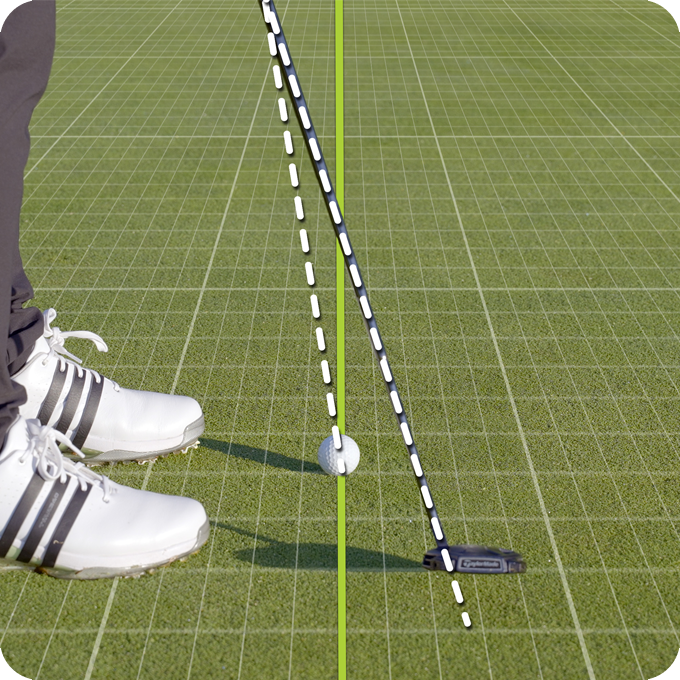
Shaft Direction at Transition P4 measures how “on-plane” the putter shaft angle is at the end of the backstroke at transition P4.

An outside value means the putter was taken back on a path that is outside the target-line plane, while an inside value signifies the opposite.

Most golf instructors agree that a target of 0° is ideal regardless of whether the putter travels on a straight or arced path. An inside Shaft Position will often result in a push, while an outside Shaft Position typically results in a pull.

Impact P7

SkyGolf
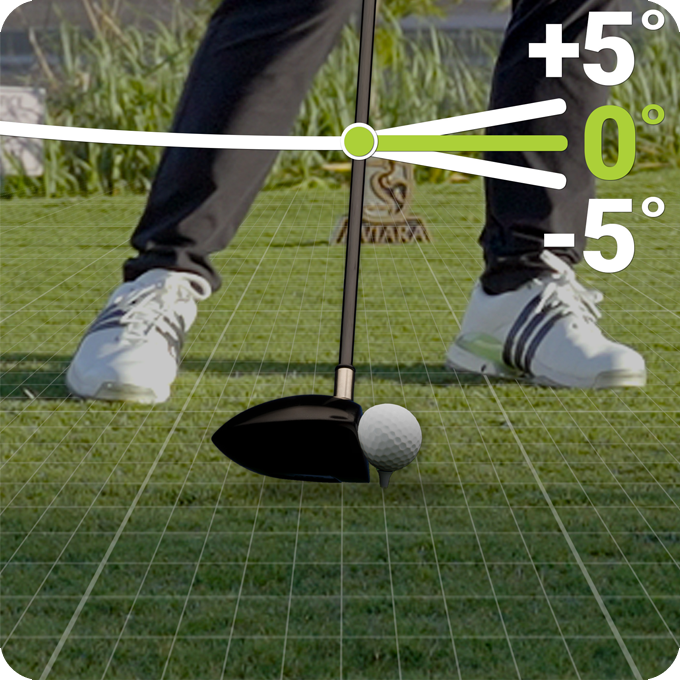
Face Angle at Impact P7

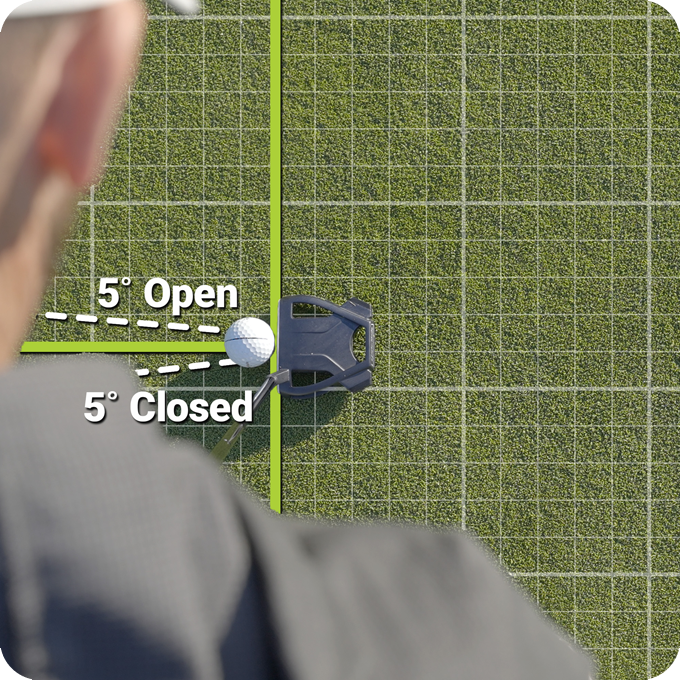
Putter Face Angle at Impact Position P7 measures the difference between the putter's face angle at the start of the putting stroke and its face angle at impact.

Face Angle is a critical factor in determining the direction of the putt. Typically, studies suggest that about 80% to 90% of any deviation in putter face angle from square is transferred to the starting line of the putt.

SkyGolf
“Dynamic” Loft at Impact P7

Putter Dynamic Loft at Impact Position P7 refers to the angle of the putter face relative to the ground at the moment of impact with the ball. Unlike static loft, which is the manufacturer-defined angle of the clubface when the putter is stationary, dynamic loft accounts for how the putter is positioned and swung during the stroke.

This angle is essential for determining both the trajectory and roll of the ball on the green.

Research suggests that a dynamic loft in the range of -1° (down) to +3° (up) is a good place to start , with +1° to +2° cited as ideal for optimal performance on the greens, balancing lift and roll for better accuracy and distance control.

SkyGolf
Path Direction at Impact P7

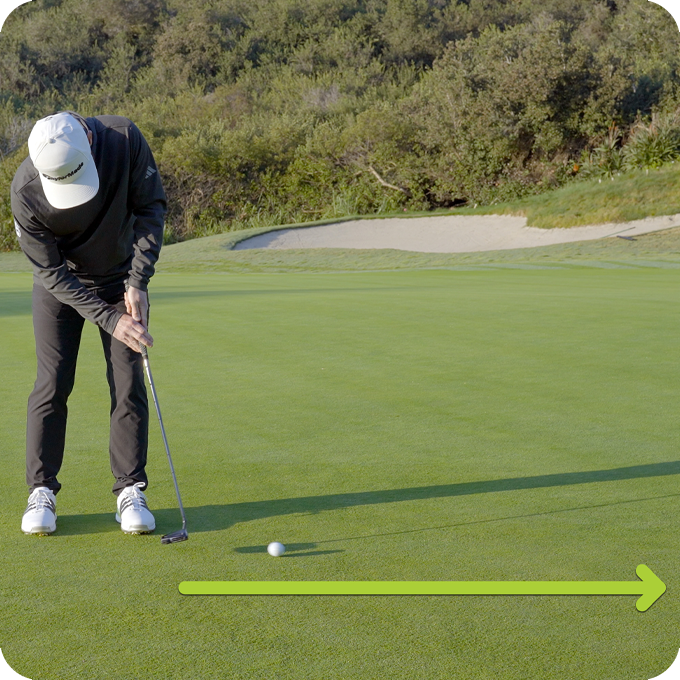
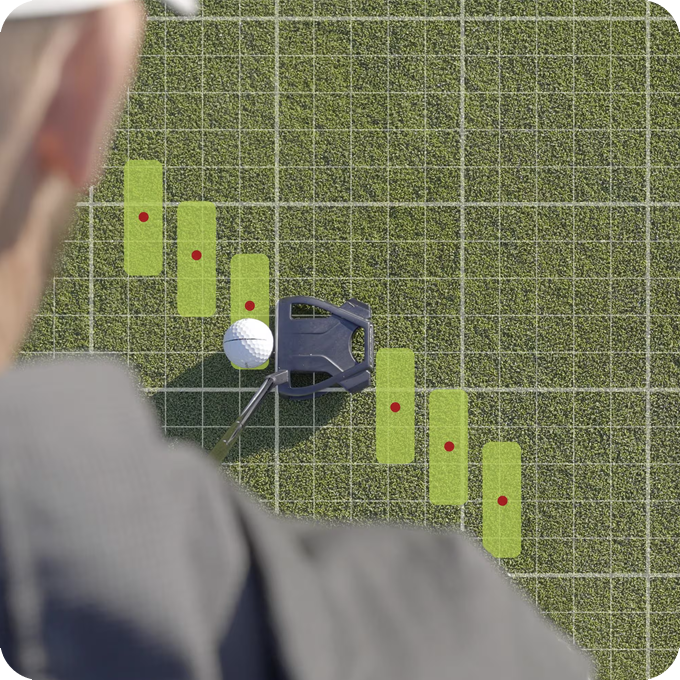
Putter Path Direction at Impact Position P7 measures the path the putter travels through the ball in relation to the target line.

An inside-to-out path indicates that the putter is travelling away from the golfer and across the target line, which may result in a push. Conversely, an outside-to-in path indicates that the putter is travelling toward the golfer and across the target line, potentially causing a pull.

SkyGolf
Rise Angle at Impact P7

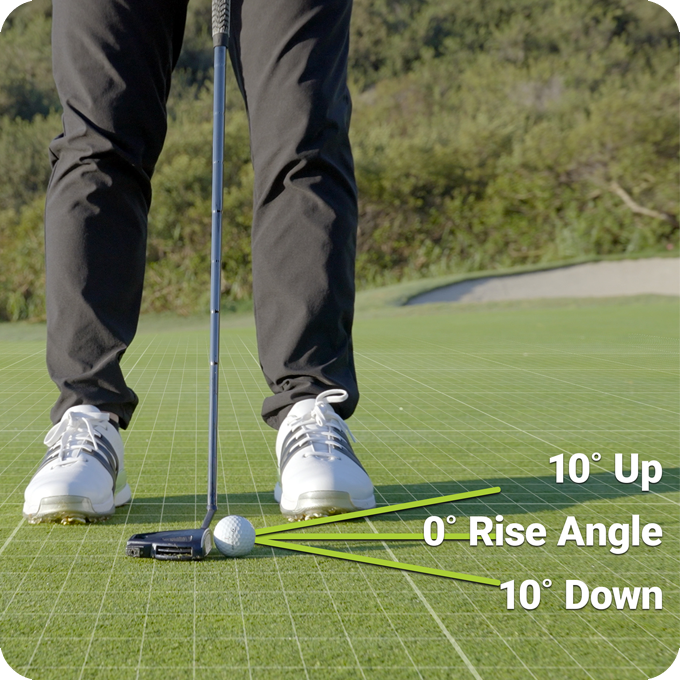
Putter Rise Angle at Impact Position P7 is the vertical angle of the putter’s path relative to the horizontal plane of the ground at impact.

A positive Rise Angle indicates that the putter head is moving upwards away from the surface of the green, while a negative Rise Angle indicates that it is moving downwards towards the green.

SkyGolf
Shaft Angle at Impact P7

Putter Shaft Angle at Impact Position P7 measures how steep or flat the putter shaft is at the moment of impact, directly influencing the lie of the putter as it strikes the ball.

If the Shaft Angle at Impact P7 is too flat, the putter head will be in a toe-up/heel-down position, increasing the likelihood of a pull. Conversely, if the Shaft Angle is too upright, the putter head will be toe-down/heel-up, which can lead to a push.

SkyGolf
Shaft Lean at Impact P7

Putter Shaft Lean at Impact Position P7 measures the angle of the putter shaft relative to the vertical, indicating how far the hands are positioned, either forward (+) or backward (-) at impact.

A forward shaft lean means that the hands are ahead of the ball, a backward shaft lean suggests that the hands are behind it.

A slight forward shaft lean is commonly used to ensure a clean strike and a smoother roll.

Ratings & Reviews